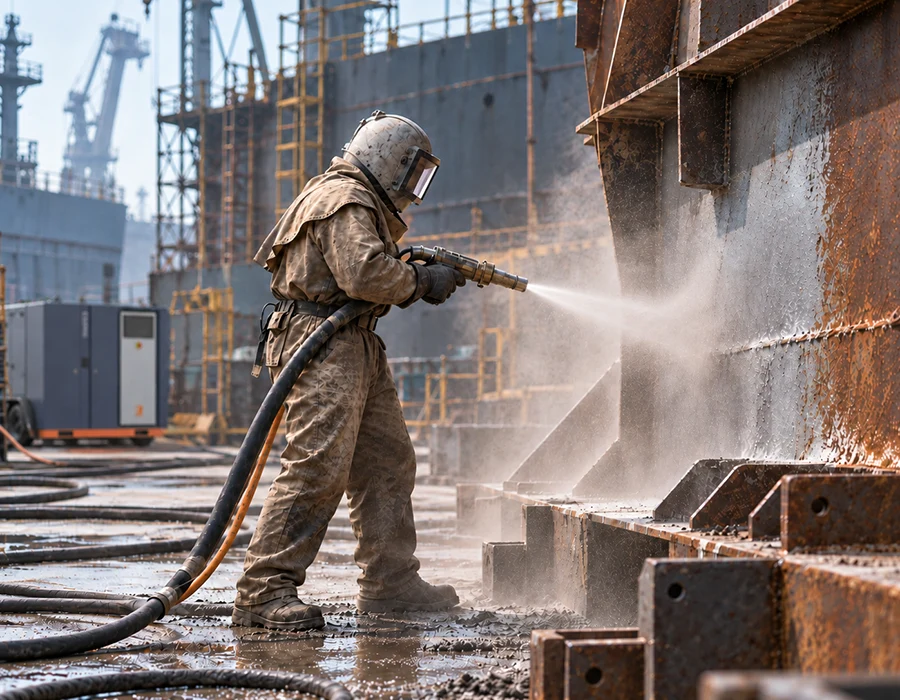
An air compressor for sandblasting supplies the compressed air needed to propel abrasive media through a blasting nozzle for removing rust, old paint, mill scale, and other surface contaminants. Choosing the right compressor helps maintain stable blasting pressure, consistent surface preparation, and efficient operation.
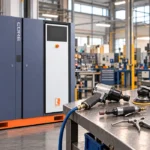
For industrial workshops and fixed surface treatment facilities, a rotary screw air compressor can provide a continuous supply of compressed air for demanding production schedules. The correct configuration depends on nozzle size, air consumption, working pressure, operating hours, and the number of blasting stations.
For applications with suitable airflow requirements, the UMW Air Core series 55 kW screw air compressor is one configuration worth evaluating.
Applications of Air Compressors in the Sandblasting Industry
Sandblasting, also known as abrasive blasting, is widely used to prepare metal surfaces before painting, coating, welding, and other manufacturing processes. A reliable compressed air supply helps maintain consistent abrasive delivery and surface treatment performance.
Steel Structure and Metal Fabrication
Steel beams, metal plates, fabricated components, and structural parts often require rust removal and surface preparation before protective coatings are applied.
A properly sized screw air compressor can support continuous blasting operations in metal fabrication plants, steel processing facilities, and industrial coating workshops.
Shipbuilding and Ship Repair
Shipyards use abrasive blasting to remove corrosion, old coatings, and surface contaminants from steel plates, hull sections, and other metal structures.
These applications may involve large surface areas and extended operating periods. Compressor capacity must therefore match the combined air consumption of the blasting equipment and the required working pressure.
Machinery and Automotive Parts
Sandblasting is used to clean metal components, remove coatings, and prepare surfaces for refinishing or subsequent manufacturing processes.
For workshops processing batches of components, a stable compressed air supply helps maintain consistent working conditions and reduces interruptions caused by insufficient airflow.
Pipelines, Tanks, and Construction Projects
Pipelines, storage tanks, bridges, and construction steelwork often require surface preparation in demanding environments.
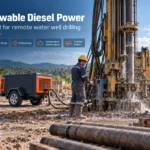
For fixed facilities with a suitable electrical supply, an electric screw air compressor may be appropriate. For remote outdoor projects without reliable electricity, a towable diesel air compressor may be a better option.
Why Choose a Screw Air Compressor for Sandblasting?
Continuous Air Supply
Sandblasting can consume a substantial amount of compressed air while the nozzle is operating. A properly sized rotary screw compressor is suitable for applications requiring sustained air delivery over extended working periods.
The compressor must be selected according to the actual air consumption of the blasting equipment rather than motor power alone.
Stable Working Pressure
Blasting performance depends on maintaining sufficient pressure at the nozzle. If pressure drops during operation, abrasive velocity and cleaning performance may be affected.
Correct compressor sizing, suitable hose diameters, properly designed pipelines, and appropriately sized fittings all help reduce pressure losses.
Suitable for Industrial Production
Industrial surface treatment facilities may operate for multiple shifts or run several pneumatic processes simultaneously.
A correctly configured screw compressor system can support these requirements when its rated airflow, working pressure, and operating conditions match the total demand.
Flexible Air System Configuration
A complete compressed air system may include a screw compressor, air receiver tank, refrigerated air dryer, precision filters, and distribution piping.
These components should be selected according to airflow, pressure, moisture load, and the air quality requirements of the application.
Recommended UMW Air Compressor for Sandblasting
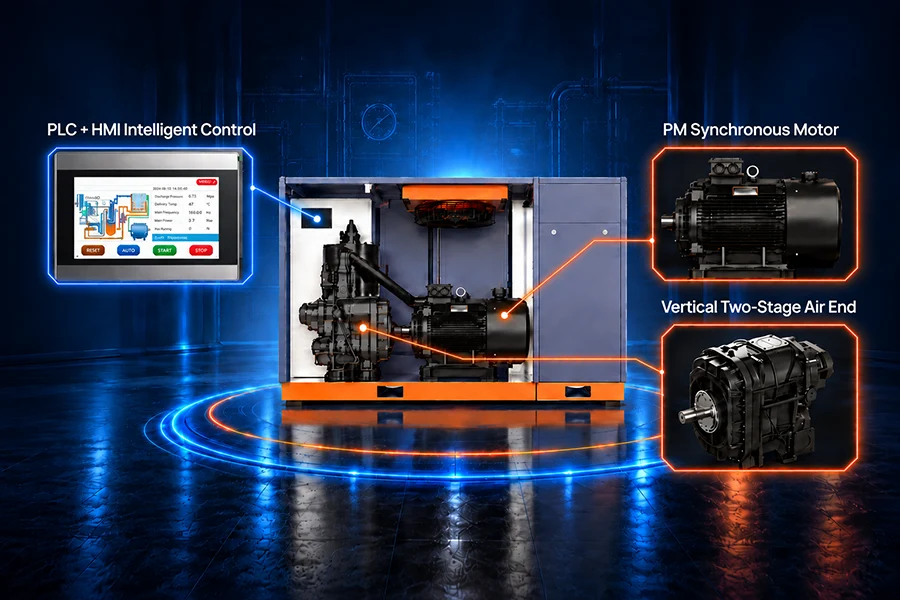
For a fixed industrial sandblasting workshop, the UMW Air Core Series 55 kW screw air compressor is a candidate configuration to evaluate when the calculated air demand is within its rated capacity.
At 8 bar, the standard configuration is rated at 9.6 m³/min of air delivery, equivalent to approximately 339 CFM. Actual suitability depends on the blasting nozzle specifications, pressure losses, and operating conditions.
Why Consider the Core Series 55 kW?
- Industrial air supply: Designed for industrial compressed air applications that require sustained operation.
- Rated airflow: The 9.6 m³/min standard air delivery at 8 bar provides a useful starting point for evaluating compatible blasting equipment.
- Flexible system configuration: The Core Series uses a split-type design, allowing the compressor, air receiver, dryer, and filters to be configured separately.
- Application-specific sizing: The final system can be configured according to required airflow, pressure, storage capacity, and air treatment needs.
View the UMW Air Core Series High Power Screw Compressor.
Important: The 55 kW configuration is a reference recommendation, not a universal solution for every sandblasting application. Before selecting it, confirm that the total air consumption remains within the compressor’s rated delivery at the required pressure, including an appropriate allowance for pressure losses and operating demand.
For outdoor sandblasting at remote jobsites without reliable electricity, consider a UMW Air towable diesel air compressor. Select the specific configuration according to the required airflow and working pressure.
How to Choose the Right Air Compressor for Sandblasting
Choosing an air compressor for sandblasting requires evaluating several technical factors.
Airflow and Nozzle Size
Airflow is one of the most important factors in compressor selection. Larger blasting nozzle orifices generally require more compressed air at the same operating pressure.
Before selecting a compressor, determine:
- Nozzle diameter and manufacturer-specified air consumption.
- Required operating pressure at the nozzle.
- Number of blasting nozzles operating simultaneously.
- Air demand from other equipment sharing the system.
- Expected operating hours and future production requirements.
Use the blasting equipment manufacturer’s consumption data to calculate the total demand. When comparing CFM and m³/min ratings, ensure that the figures use a consistent measurement basis.
Tekanan Kerja
The required pressure depends on the blasting equipment and the intended surface preparation process.
Compressor discharge pressure is not necessarily the same as pressure at the blasting nozzle. Hoses, fittings, filters, dryers, and pipelines introduce pressure losses that must be considered during system design.
Continuous Operating Demand
A compressor that meets a short peak demand may not provide enough air for continuous blasting.
Evaluate the compressor’s rated airflow at the required pressure, expected duty cycle, and simultaneous equipment demand. An appropriate engineering margin should be included in the final sizing calculation.
Installation Environment
Consider the available electrical supply, ambient temperature, dust exposure, ventilation, maintenance access, and expected operating schedule.
For permanent workshops, an electric screw compressor can be integrated into a fixed compressed air system. For remote construction sites, a mobile diesel-powered solution may be more practical. If you require further guidance, please refer to the UMW Air Compressor Selection Guide.
What Accessories Does a Sandblasting Air Compressor Need?
The compressor is only one part of a reliable compressed air system. Appropriate supporting equipment helps manage pressure fluctuations, moisture, and contaminants.
Tangki Penampung Udara
An air receiver tank stores compressed air and helps buffer short-term demand fluctuations. It can support more stable system pressure, but it cannot compensate for a compressor that consistently delivers less air than the blasting equipment consumes.
Tank capacity should be selected according to compressor output, operating pressure, demand fluctuations, and system layout.
Pengering Udara Berpendingin
Moisture in compressed air can cause abrasive media to clump, interrupting media flow and affecting blasting consistency.
A suitable refrigerated air dryer, combined with effective condensate separation and drainage, can help reduce moisture-related problems. Dryer capacity must match the compressor’s airflow and operating conditions.
Precision Filters
Precision filters can help remove oil aerosols, water droplets, and solid particles, depending on the selected filtration stages and specifications.
Choose the filtration arrangement according to the compressor configuration, operating pressure, downstream equipment, and required air quality.
Safety note: Process air used for abrasive blasting is not automatically suitable for breathing. If an operator uses a supplied-air respirator, the breathing-air supply must meet applicable respiratory protection requirements. Do not assume that a standard compressor and its normal filtration system provide safe breathing air.
Frequently Asked Questions About Air Compressors for Sandblasting
1. What size air compressor do I need for sandblasting?
The required compressor size depends on nozzle diameter, operating pressure, simultaneous air consumption, hose losses, and duty cycle. Calculate the total airflow requirement first, then select a compressor that meets the demand at the specified pressure.
2. Is a 55 kW screw air compressor suitable for sandblasting?
A 55 kW screw compressor rated at 9.6 m³/min at 8 bar may be suitable for an application whose calculated airflow demand falls within its rated capacity. The nozzle manufacturer’s specifications and system pressure losses must be checked before confirming the selection.
3. Is 8 bar enough for sandblasting?
It depends on the blasting equipment and required pressure at the nozzle. The compressor must provide sufficient pressure after accounting for losses through hoses, fittings, and other components.
4. Do I need an air dryer for sandblasting?
An air dryer is often beneficial because excess moisture can interfere with abrasive flow and surface preparation. The required dryer capacity depends on airflow, ambient conditions, moisture load, and the application’s air quality requirements.
Kesimpulan
For fixed industrial sandblasting applications, the UMW Air Core Series 55 kW configuration, rated at 9.6 m³/min at 8 bar, is a practical starting point for evaluation when the calculated air demand matches its capacity. For remote outdoor work without reliable electricity, a towable diesel air compressor may be more suitable.
To determine the right configuration, confirm your nozzle specifications, required airflow, working pressure, operating schedule, and installation environment.
Explore UMW Air industrial screw air compressors or contact the UMW Air team for assistance with compressor sizing and complete compressed air system configuration.