Laser cutting machines require a stable and clean compressed air supply to achieve precise cutting results. Choosing the right laser cutting air compressor directly affects cutting quality, operating costs, and equipment lifespan.
In modern manufacturing, compressed air is widely used as an assist gas for fiber laser cutting machines. If the compressor system cannot meet the requirements, problems such as unstable pressure, poor cutting edges, and increased maintenance costs may occur.
This guide explains the key laser cutting air compressor requirements, including pressure, air quality, flow rate, and system configuration.
1. Why Laser Cutting Machines Need Compressed Air
Laser cutting machines use assist gases to remove molten metal and improve cutting efficiency. In many applications, compressed air replaces nitrogen because it reduces operating costs.
1.1 Lower Operating Costs
Using compressed air is significantly cheaper than using nitrogen cylinders. A properly sized laser cutting air compressor can provide a continuous air supply for production lines.
Compressed air systems reduce gas expenses and simplify plant logistics.
1.2 Stable Cutting Performance
Stable air pressure helps remove molten material quickly from the cutting area.
When air pressure fluctuates, the cutting edge may become rough or oxidized. A reliable compressor system ensures consistent cutting results.
1.3 Improved Production Efficiency
Factories using laser cutting machines often operate continuously. A high-performance compressor ensures uninterrupted airflow for long production cycles.
2. Key Laser Cutting Air Compressor Requirements
Selecting the right compressor requires understanding the main technical parameters.
2.1 Air Pressure Requirements
Laser cutting typically requires air pressure between 8 bar and 16 bar, depending on the machine power and material thickness.
Examples:
1.Thin sheet metal cutting: 8–10 bar
2.Medium thickness plates: 10–13 bar
3.Thick materials: 13–16 bar
Higher pressure helps remove molten metal more efficiently during cutting.
2.2 Air Flow Rate (CFM / m³/min)
Airflow determines whether the system can support continuous operation.
Typical airflow demand depends on laser power:
1–3 kW fiber laser: 0.8–1.5 m³/min
3–6 kW fiber laser: 1.5–3 m³/min
6–12 kW fiber laser: 3–6 m³/min
Insufficient airflow leads to pressure drops and poor cutting performance.
2.3 Air Quality and Dryness
Laser cutting requires clean and dry compressed air.
Moisture and oil contamination can damage the laser head or contaminate the optical system.
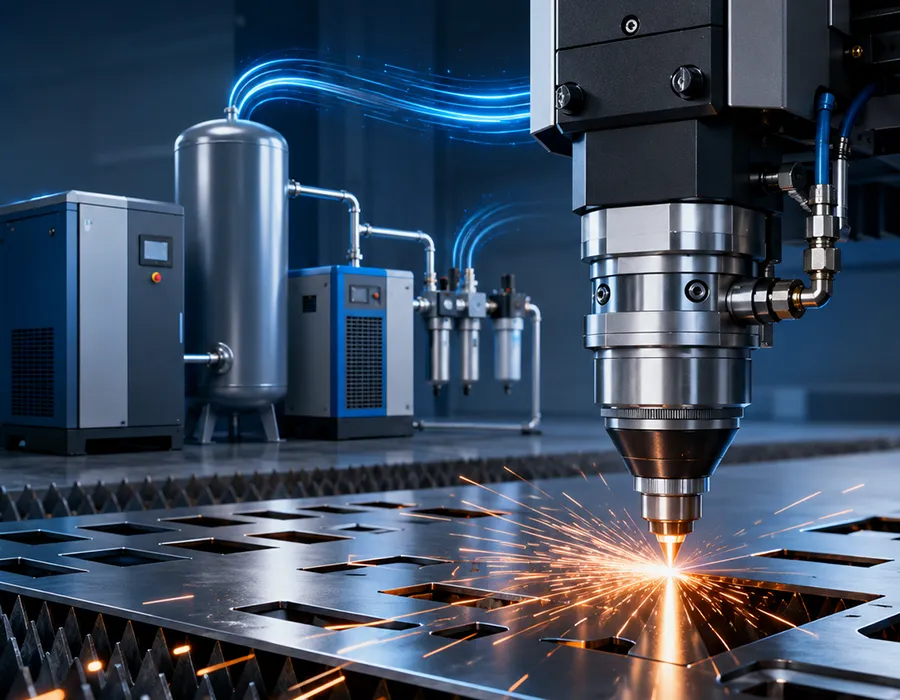
A proper system usually includes:
1.Air compressor
2.Refrigerated air dryer
3.Precision filters
4.Air storage tank
These components maintain stable and clean air quality.
3. Recommended Compressor System Configuration
A complete compressed air system improves cutting performance and extends equipment life.
3.1 Screw Air Compressor
Most factories choose a rotary screw air compressor for laser cutting.
Advantages include:
1.Continuous operation capability
2.Stable pressure output
3.Energy-efficient performance
Variable speed compressors further reduce energy consumption.
3.2 Air Dryer
An air dryer removes moisture from compressed air.
Laser cutting systems typically require a dew point below 3°C to prevent condensation.
Dry air protects laser optics and cutting heads.
3.3 Air Filters
Multi-stage filtration ensures high air purity.
Typical filter configuration:
1.Pre-filter for particles
2.Fine filter for oil removal
3.Ultra-fine filter for precision protection
Clean air improves cutting quality and reduces maintenance.
4. Choosing the Right Laser Cutting Air Compressor
Selecting a compressor depends on several production factors.
4.1 Match Compressor Capacity with Laser Power
Different laser machines require different airflow levels.
Choosing a compressor with insufficient capacity causes pressure instability. Oversized systems increase energy consumption.
Therefore, manufacturers should match compressor specifications with laser cutting equipment.
4.2 Consider Energy Efficiency
Compressed air systems can account for 20–30% of factory electricity consumption.
Energy-efficient solutions include:
1.Variable speed drive compressors
2.High-efficiency motors
3.Intelligent control systems
4.These technologies reduce operating costs over time.
4.3 Evaluate System Reliability
Industrial laser cutting often operates 24/7. Reliable compressors ensure stable production and reduce downtime.
Choosing high-quality equipment helps avoid frequent maintenance and production interruptions.
5. Common Problems Caused by Incorrect Compressor Selection
Using an unsuitable compressor can create several operational issues.
5.1 Rough Cutting Edges
Low air pressure may leave slag on the cutting surface.
5.2 Laser Head Contamination
Moisture or oil in compressed air can contaminate optical components.
5.3 Increased Operating Costs
Inefficient compressors consume more electricity and require more maintenance.
Proper laser cutting air compressor selection prevents these problems.
Conclusion
A well-designed compressed air system plays a critical role in laser cutting performance. Key laser cutting air compressor requirements include stable pressure, sufficient airflow, and high air purity.
Manufacturers should carefully evaluate compressor capacity, filtration systems, and energy efficiency before purchasing equipment.
With the right laser cutting air compressor, factories can improve cutting precision, reduce operating costs, and maintain reliable production performance.
Visit our website to explore more compressor solutions:Contact – UMWAIR Industrial Compressor Manufacturers