Packaging machines rely heavily on stable compressed air systems. An efficient air compressor for packing machine ensures smooth operation, consistent pressure, and reliable product quality. Without a suitable compressor, packaging lines may experience pressure fluctuations, machine downtime, or production delays.
Choosing the correct compressor requires understanding the air demand, system efficiency, and reliability requirements. This guide explains how to select the best air compressor for packing machine and what factors packaging manufacturers should consider.
1. Why Packing Machines Need a Reliable Air Compressor for Packing Machine
Packaging equipment uses compressed air to power various pneumatic components. These components require stable air pressure and clean airflow to maintain accuracy.
1.1 Pneumatic Actuation in Packaging Systems
Many packaging machines use pneumatic cylinders and valves to operate mechanical movements. These include:
1.Product filling systems
2.Sealing and cutting mechanisms
3.Conveyor positioning devices
A stable air compressor for packing machine ensures these components function smoothly and maintain consistent packaging quality.
1.2 Maintaining Continuous Production
Packaging production lines often operate continuously for long hours. A reliable compressor prevents pressure drops that could interrupt production.
Stable compressed air allows machines to maintain consistent speed and reduce downtime.
2. Key Factors When Choosing an Air Compressor for Packing Machine
Selecting the right compressor requires evaluating several technical parameters.
2.1 Required Air Flow Capacity
Air flow capacity is measured in CFM or m³/min. It determines how much compressed air the system can deliver.
To select the correct air compressor for packing machine, manufacturers should calculate:
1.Total air consumption of all packaging equipment
2.Peak demand during production
3.Additional safety margin of about 10–20%
Proper capacity prevents insufficient air supply during peak operation.
2.2 Stable Air Pressure Requirements
Packaging machines normally require pressure between 6–8 bar.
If pressure fluctuates, packaging accuracy may decrease. Seal quality and product alignment can also be affected.
A well-designed air compressor for packing machine maintains stable pressure across the entire production cycle.
2.3 Oil-Free or Oil-Lubricated Compressors
Different packaging environments require different compressor types.
Oil-Free Air Compressors
Best for industries with strict cleanliness requirements, such as:
1.Food packaging
2.Pharmaceutical packaging
3.Electronics packaging
Oil-free compressors eliminate the risk of oil contamination.
Oil-Lubricated Screw Compressors
These compressors provide higher efficiency and durability. They are often used in general packaging operations where air purity requirements are moderate.
3. Energy Efficiency and Operating Costs
Energy consumption represents a significant portion of compressor operating costs.
3.1 Variable Speed Drive Technology
Modern compressors often include variable speed drives (VSD). This technology adjusts motor speed based on air demand.
Advantages include:
1.Reduced electricity consumption
2.Lower mechanical wear
3.More stable system pressure
An energy-efficient air compressor for packing machine can significantly reduce long-term operational costs.
3.2 Intelligent Control Systems
Advanced control systems allow operators to monitor compressor performance in real time.
Key features include:
1.Pressure monitoring
2.Energy consumption tracking
3.Automatic load adjustment
These features help packaging factories optimize compressor performance and reduce maintenance costs.
4. Supporting Equipment for Packaging Air Systems
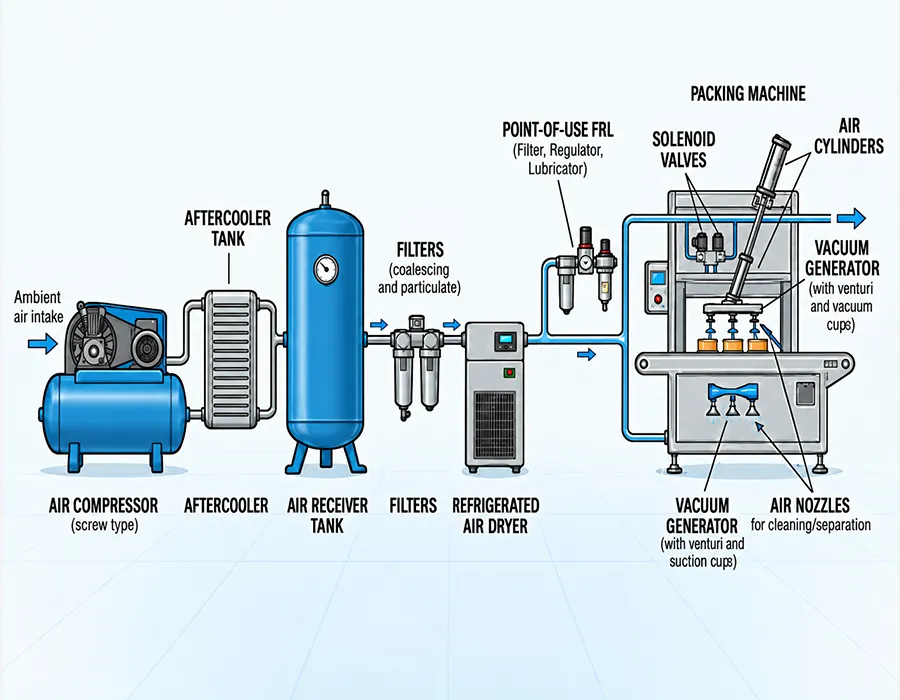
A complete compressed air system includes more than just the compressor.
4.1 Air Dryers
Moisture in compressed air can damage packaging equipment.
Air dryers remove water vapor and protect pneumatic components.
4.2 Air Filters
Filters remove dust, oil particles, and other contaminants.
Clean compressed air helps extend the service life of packaging machines.
4.3 Air Storage Tanks
Air receivers stabilize pressure and store compressed air during peak demand.
This helps maintain steady airflow for packaging operations.
5. Maintenance Tips for Packing Machine Air Compressors
Proper maintenance improves system reliability and extends equipment life.
5.1 Regular Filter Replacement
Air filters and oil filters should be replaced according to maintenance schedules.
Clean filters maintain airflow efficiency and prevent system blockages.
5.2 Monitor Oil and Temperature
For oil-lubricated compressors, operators should regularly check oil levels and operating temperature.
Stable lubrication ensures long-term compressor reliability.
5.3 Check System Leaks
Air leaks can waste large amounts of energy.
Routine inspections help identify leaks in pipelines, connectors, and valves.
6. Choosing the Right Supplier
Selecting a reliable compressor supplier is equally important.
A professional supplier provides:
1.Energy-efficient compressor solutions
2.Technical support and installation guidance
3.Long-term spare parts supply
4.Maintenance services
Working with experienced manufacturers ensures your air compressor for packing machine operates reliably for many years.
Conclusion
Selecting the right air compressor for packing machine is essential for stable packaging operations. Manufacturers should evaluate air capacity, pressure stability, energy efficiency, and air quality requirements before making a decision.
A well-designed compressed air system improves production efficiency, reduces operating costs, and ensures consistent packaging quality. By choosing the appropriate compressor and maintaining the system properly, packaging facilities can achieve reliable long-term performance.
Visit our website to explore more compressor solutions:Contact – UMWAIR Industrial Compressor Manufacturers