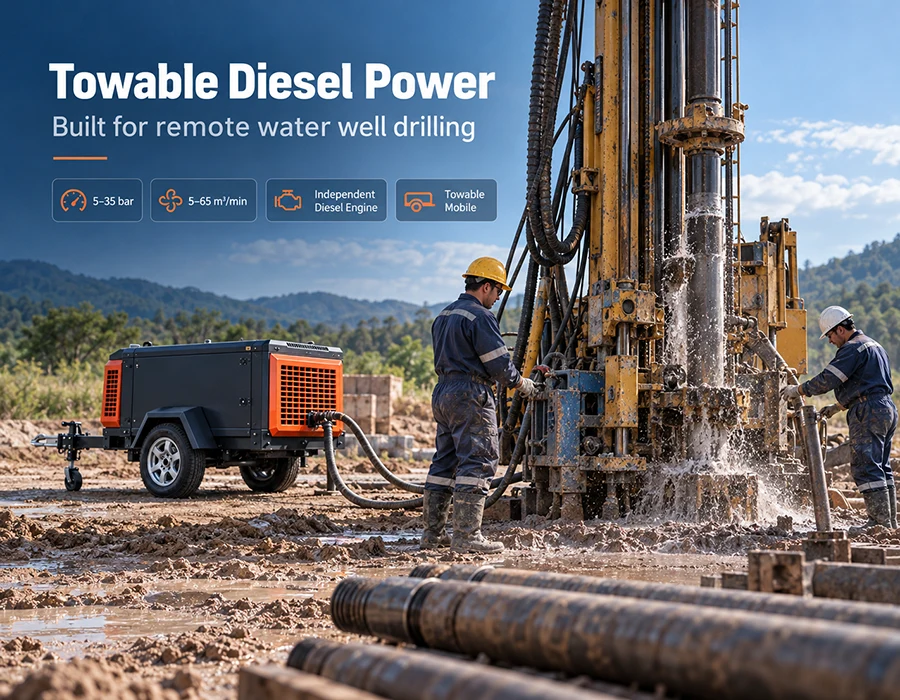
Water well drilling is essential for agricultural irrigation, residential water supply, and groundwater development. However, drilling projects often take place in remote locations where access to electricity is limited or unavailable. In these environments, a reliable compressed air supply is critical for maintaining drilling operations.
A portable diesel air compressor provides an independent source of compressed air for water well drilling equipment. It is particularly useful in air rotary and down-the-hole (DTH) drilling, where compressed air helps operate drilling tools and remove rock cuttings from the borehole.
Understanding how diesel air compressors work in water well drilling can help drilling contractors select suitable equipment, improve operating efficiency, and reduce unnecessary downtime.
What Is the Role of an Air Compressor in Water Well Drilling?
A portable diesel air compressor supplies compressed air to drilling equipment, primarily for operating pneumatic hammers and removing drilled material from the borehole.
In air rotary drilling, compressed air travels through the drill pipe to the bottom of the borehole. It then carries rock fragments, dust, and other cuttings upward through the space between the drill pipe and the borehole wall.
In DTH drilling, compressed air also powers the hammer mechanism, generating repeated impacts that break hard rock formations.
The compressor therefore performs three important functions:
- Powering pneumatic drilling tools: Supplies air to operate DTH hammers and compatible drilling equipment.
- Removing drill cuttings: Transports broken rock and debris from the bottom of the borehole to the surface.
- Supporting continuous drilling: Maintains the airflow required for effective drilling and hole cleaning.
Both working pressure and air delivery must match the drilling equipment. High pressure alone cannot compensate for insufficient airflow.

Key Applications of Portable Diesel Air Compressors in Water Well Drilling
1. Down-the-Hole (DTH) Hammer Drilling
DTH drilling is widely used for water wells in hard rock formations, including granite, limestone, and other consolidated rock.
During the drilling process, compressed air enters the DTH hammer through the drill pipe. The air operates an internal piston that repeatedly strikes the drill bit, breaking the rock into smaller fragments.
The compressed air then passes through the hammer and drill bit, carrying the rock cuttings toward the surface.
A portable diesel air compressor provides the pressure and airflow required for this process without depending on an external electrical supply.
For DTH drilling, compressor selection depends on the hammer specifications, borehole diameter, drilling depth, and expected groundwater conditions. Insufficient pressure can reduce hammer performance, while inadequate airflow may prevent effective removal of cuttings.
2. Air Rotary Water Well Drilling
Air rotary drilling uses a rotating drill bit and compressed air to penetrate geological formations.
Unlike drilling methods that circulate water or drilling mud, air rotary drilling uses compressed air as the primary circulation medium.
Air flows down the drill pipe and returns through the annular space, transporting drilled material out of the borehole.
This method is particularly suitable for many consolidated rock formations. It can also help drilling operators identify water-bearing zones as water and cuttings return to the surface.
For these applications, a portable diesel air compressor can provide a continuous air supply while allowing the drilling team to operate in locations without grid electricity.
However, air rotary drilling is not suitable for every geological condition. Unconsolidated formations may require casing, alternative drilling fluids, or a different drilling method to maintain borehole stability.
3. Borehole Cleaning and Cuttings Removal
Effective borehole cleaning is essential during water well drilling.
As drilling progresses, rock fragments and debris accumulate at the bottom of the borehole. If these materials are not removed efficiently, they can interfere with drilling operations, accelerate tool wear, and increase the risk of equipment becoming stuck.
Compressed air helps transport these materials to the surface.
The required airflow depends on the borehole diameter, drill pipe diameter, drilling depth, and the size and quantity of cuttings.
A properly matched compressor helps maintain sufficient air velocity for cuttings removal, supporting consistent drilling progress.
Why Use a Portable Diesel Air Compressor for Water Well Drilling?
Independent Operation in Remote Locations
Water well drilling projects frequently take place in agricultural regions, mountainous areas, and rural communities where electrical infrastructure is limited.
A diesel-powered compressor generates compressed air independently, eliminating the need for a permanent grid connection.
This makes it suitable for temporary drilling operations and remote jobsites where installing an electrical supply would be impractical.
Flexible Transportation Between Drilling Sites
Water well drilling contractors often need to move equipment between multiple borehole locations.
Towable diesel air compressors offer greater flexibility than stationary installations.
A mobile chassis allows the compressor to be transported and repositioned using suitable towing equipment, helping contractors adapt to changing project locations.
Transportation requirements, including weight limits and road regulations, should be checked before moving the equipment on public roads.
Reliable Compressed Air for Extended Operations
DTH hammers and air rotary drilling equipment require compressed air throughout the drilling process.
Large variations in pressure or insufficient airflow can affect hammer operation and cuttings removal.
A properly sized diesel rotary screw compressor is designed to deliver compressed air during extended jobsite operations.
The actual performance depends on the compressor model, operating conditions, and air demand of the drilling equipment.
Adaptability to Outdoor Working Conditions
Water well drilling locations may expose compressors to dust, high ambient temperatures, and changing weather conditions.
Diesel compressors designed for outdoor applications commonly use protective enclosures, engine air filtration, and cooling systems to support operation under demanding conditions.
Regular inspections and maintenance remain essential, especially in dusty environments.
Portable Diesel Air Compressor for Water Well Drilling
UMW Air supplies towable diesel screw air compressors for construction, drilling, mining, and other outdoor applications where independent compressed air is required.
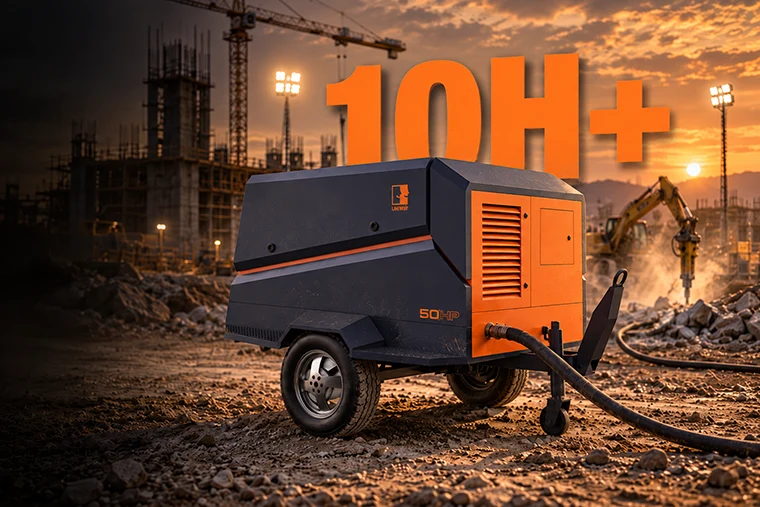
The portable diesel air compressor combines a diesel engine, oil-injected rotary screw air end, fuel tank, and compressed air system on a mobile chassis.
Its configuration is intended to provide flexibility for contractors operating at different jobsites.
Main Technical Specifications
| Parameter | Diesel Series |
|---|---|
| Compressor Type | Towable Diesel Screw Air Compressor |
| Working Pressure | 5–35 bar |
| Air Delivery | 5–65 m³/min |
| Diesel Engine Power | 75–700 hp |
| Engine Options | UMW / Cummins / Caterpillar |
| Cooling System | Air-Cooled |
| Mobility | Towable Two-Wheel Chassis |
| Operating Time | 10+ Hours Under Suitable Conditions |
Specifications represent the overall product range. Pressure, airflow, engine power, and operating time depend on the selected model and working conditions.
Features Relevant to Water Well Drilling
Independent diesel engine
The compressor operates without a permanent external power supply, making it suitable for off-grid drilling locations.
Towable chassis design
A two-wheel chassis, towing structure, and support wheel facilitate transportation and positioning between worksites.
Air-cooled system
The air-cooled design supports heat dissipation without requiring a separate cooling-water supply.
Multi-stage intake air filtration
The air filtration system helps protect the engine and compressor from airborne dust encountered in outdoor environments.
Intelligent control system
The control panel monitors operating parameters such as discharge pressure, discharge temperature, engine speed, and oil pressure, with alarm and shutdown protection functions.
These features support mobile drilling applications, but the appropriate UMW Air model must still be selected according to the drilling rig and pneumatic equipment requirements.
How to Choose a Portable Diesel Air Compressor for Water Well Drilling
Selecting the correct compressor involves more than choosing the highest available pressure or engine power.
The compressor must supply the required airflow at the working pressure demanded by the drilling equipment.
1. Identify the Drilling Method
The first step is to determine whether the project uses air rotary drilling, DTH hammer drilling, or another method.
DTH hammers require compressed air to operate their percussion mechanisms, while conventional air rotary drilling primarily uses air for flushing and cuttings removal.
Each method has different compressed air requirements.
2. Determine the Required Working Pressure
Working pressure is particularly important for DTH drilling.
The required pressure depends on the hammer design, operating conditions, and resistance within the drilling system.
As the borehole becomes deeper or groundwater inflow increases, additional backpressure may affect drilling performance.
The compressor must deliver sufficient pressure at the drilling equipment after accounting for losses through hoses, fittings, and drill pipes.
3. Calculate Airflow Requirements
Air delivery is another critical parameter when selecting a water well drilling air compressor.
Sufficient airflow is necessary both to operate the drilling equipment and to carry cuttings to the surface.
The required air volume depends on factors including:
- DTH hammer air consumption
- Borehole and drill pipe diameters
- Drilling depth
- Rock formation and cutting conditions
- Groundwater inflow
Contractors should verify the compressor’s rated air delivery at the required operating pressure rather than selecting equipment based solely on maximum airflow.
4. Consider Drilling Depth and Geological Conditions
Shallow boreholes and deeper hard rock drilling projects can have substantially different compressed air demands.
For example, a larger borehole may require greater airflow to maintain effective cuttings transport, while groundwater entering a deep borehole can increase the pressure needed for drilling.
Therefore, drilling depth alone is not sufficient to determine compressor capacity.
The complete drilling configuration should be evaluated before selecting a compressor.
5. Evaluate Runtime and Site Conditions
Water well drilling may require long operating periods, especially when drilling through hard geological formations.
Contractors should consider fuel tank capacity, expected working hours, maintenance access, and ambient conditions.
Air demand and available compressor performance can also be affected by operating altitude and temperature.
For remote projects, fuel availability and spare parts support should be considered alongside technical specifications.
6. Check Compressed Air Quality Requirements
Compressed air used for water well drilling may come into contact with the borehole and surrounding geological formations.
Because many diesel rotary screw compressors are oil-injected, oil carryover and other contaminants need to be considered.
Suitable downstream filtration or additional air treatment may be necessary to reduce contamination risks, particularly when drilling drinking-water wells.
The required treatment arrangement should follow applicable water well construction regulations and project specifications.
Example: Choosing Compressed Air Equipment for a Remote Hard Rock Well
Consider a drilling contractor preparing to construct a water well in a remote area with hard rock formations and no nearby electrical supply.
The project uses a DTH hammer drilling rig. Compressed air is needed both to power the hammer and to remove rock cuttings from the borehole.
A towable diesel compressor is a practical option because it can operate independently of the power grid and be transported with the drilling equipment.
Before choosing a model, the contractor needs to confirm the DTH hammer’s required pressure and air consumption, the proposed borehole diameter and depth, and the expected geological conditions.
The compressor can then be matched to the drilling equipment based on its available airflow at the required operating pressure.
This approach helps avoid selecting an undersized compressor or purchasing unnecessary capacity.
Frequently Asked Questions About Portable Diesel Air Compressors
What pressure is required for DTH water well drilling?
The pressure requirement depends on the DTH hammer model, drilling depth, borehole conditions, and groundwater inflow. Contractors should follow the hammer manufacturer’s pressure specifications and account for pressure losses in the drilling system.
How much airflow does a water well drilling compressor need?
Required airflow depends on hammer air consumption, hole diameter, drill pipe diameter, and drilling conditions. The compressor must provide enough air for both equipment operation and cuttings removal at the required pressure.
Can a portable diesel air compressor operate without electricity?
Yes. A diesel-powered air compressor uses its engine to drive the compression system, so it does not require a permanent external electrical supply for compressed air generation.
Are portable diesel air compressors suitable for deep water well drilling?
They can be suitable for deep drilling when the selected model provides sufficient pressure and airflow. The maximum practical drilling depth depends on the complete drilling system, geological conditions, and groundwater pressure—not simply the compressor’s maximum pressure rating.
How long can a portable diesel air compressor operate continuously?
Operating time depends on the fuel tank, engine configuration, load, and site conditions. Some diesel compressor configurations can support more than 10 hours of operation under suitable conditions. Actual runtime must be confirmed for the selected model.
Is additional air filtration needed for water well drilling?
Additional air treatment may be necessary, especially for drinking-water well construction. Oil-injected compressors can introduce lubricant aerosols into the air stream, so appropriate filtration and compliance with local groundwater protection requirements are important.
Conclusion
A portable diesel air compressor plays an important role in water well drilling by supplying compressed air for DTH hammers, air rotary drilling, and borehole cleaning. Its independent diesel power and mobile design make it particularly useful for drilling contractors working in rural locations and remote areas without reliable electricity.
UMW Air offers towable diesel screw air compressors with multiple pressure and airflow configurations to support different outdoor compressed air applications. For assistance with compressor selection, explore the Diesel Air Compressor Series or contact UMW Air with your drilling equipment specifications and operating requirements.