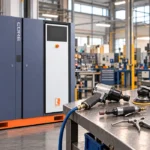
Vietnam’s woodworking and furniture factories use compressed air throughout cutting, machining, assembly and finishing. CNC routers, pneumatic clamps, nail guns and spray equipment may operate in the same workshop, but each places a different demand on the air system. Selecting a compressor therefore starts with the production process, the number of machines running at once and the air quality required at each point of use.
1. Customer and Industry Background
Woodworking operations in Vietnam range from small custom furniture workshops to factories producing cabinets, panels and assembled furniture. As production expands, a workshop may add CNC routers, edge banding equipment, pneumatic assembly tools and finishing stations to an existing air network.
This growth changes the air demand. A compressor that served a few hand tools may struggle when several automated machines start together. Pressure fluctuations can interrupt pneumatic movements, while moisture and contaminants in the air can affect sensitive equipment and finished surfaces.
2. Workpieces, Processing Steps and Air Supply Problems
A typical furniture production line processes wood panels, cabinet components, doors or other furniture parts. Compressed air may be used at several points:
- CNC routing and drilling: Pneumatic components support tool changes, machine movements and selected cleaning functions, depending on the machine design.
- Panel handling and clamping: Cylinders hold or position workpieces during processing.
- Assembly: Nail guns, staplers and other pneumatic tools support repetitive fastening tasks.
- Spray finishing: Spray equipment requires air quality and pressure suited to the coating process.
These uses rarely have identical operating cycles. Some draw air intermittently; others run for long periods. The main selection problem is ensuring sufficient airflow and stable pressure when the machines that matter most operate simultaneously.
3. Previous Air Supply Method and Its Limitations
In a growing woodworking workshop, air supply is often expanded one machine at a time. New tools are connected to the existing compressor and pipework without reassessing total demand, pressure loss or air treatment.
This approach can create three common problems. First, pressure at the far end of the workshop may fall when multiple machines run. Second, an undersized receiver may provide too little buffer during short periods of high demand. Third, insufficient drying or filtration can allow moisture and contaminants to reach CNC equipment or finishing tools.
Wood dust also affects the installation environment. A compressor placed near cutting and sanding equipment needs adequate ventilation, accessible intake filtration and a practical cleaning schedule.
4. Why the Customer Would Select UMW Air
The appropriate compressor depends on measured airflow, required pressure, operating hours and the workshop layout. UMW Air offers three series relevant to most woodworking machinery applications:
| Production scale | Suggested series | Typical fit |
|---|---|---|
| Small woodworking workshop or limited equipment | Micro Series, 4–7.5 kW | Compact air supply for light production and selected precision woodworking equipment |
| Furniture panel processing workshop | Prime Series, 11–22 kW | Integrated air supply for several machines and tools |
| Automated furniture production line | Core Series, 30–110 kW | Split system configuration for higher or distributed factory demand |
This table is an initial selection guide, not a fixed power requirement for a given machine. The final model should be chosen from the equipment manufacturers’ air consumption data and the factory’s simultaneous operating demand.
5. On-Site Testing and the Actual Production Process
Before confirming a compressor configuration, the workshop should test the air system under normal and peak production conditions.
The assessment begins by listing every air-consuming machine, its required inlet pressure and its air consumption. The team then records which machines operate together during cutting, drilling, assembly and finishing. Pressure should be checked at both the compressor outlet and critical points of use while those machines are running.
The test should also check the condition of the compressed air. Drain operation, dryer performance and filtration should be reviewed, especially where air reaches CNC controls or spray equipment. Finally, the compressor location should be inspected for ventilation, wood dust accumulation and maintenance access.
These observations establish whether the workshop needs more compressor capacity, better air treatment, additional storage, pipework changes or a combination of these measures.
6. Equipment Advantages in a Woodworking Workshop
Stable air delivery for multiple machines. A correctly sized screw compressor and receiver help maintain the pressure required by pneumatic tools and automated equipment during changing production demand.
Dryer and filtration options. A refrigerated dryer and matched precision filters help reduce moisture and contaminants before compressed air reaches sensitive points of use. Finishing equipment may need its own final air treatment, selected to match the coating supplier’s requirements.
Configuration matched to the workshop. Micro and Prime provide compact integrated options. Core supports a split configuration when a larger factory needs more flexibility in placing its compressor, receiver and air treatment equipment.
Monitoring and maintenance access. Pressure, temperature and alarm information help operators identify abnormal conditions. In dusty woodworking environments, accessible filters and a regular cleaning plan are also essential.
7. Results to Measure and Customer Feedback
A woodworking factory should evaluate the system against its original production problems rather than relying on compressor power alone. Useful before-and-after measures include:
- Pressure at the most demanding machine during simultaneous operation
- Frequency of low-pressure alarms or interrupted pneumatic cycles
- Condensate and moisture observations at points of use
- Compressor running hours and electricity consumption for comparable production output
- Finishing defects linked to compressed air quality
Customer feedback should then be collected from machine operators and maintenance staff: Are CNC tool changes and clamps operating consistently? Are pneumatic assembly tools responding as expected? Is the air supply stable throughout the shift?
Specific improvements or customer quotations should be added to this section only after on-site measurements and feedback are available.
8. Why Choose UMW Air for Woodworking Compressed Air?
A woodworking air system involves more than selecting a compressor motor size. The compressor, air receiver, dryer, filters and distribution network must work together at the pressure and airflow required by the production line.
UMW Air can help compare compact integrated and split system configurations using the factory’s machine list, working schedule and installation conditions. This is especially useful when a workshop is expanding from a few pneumatic tools to CNC machining and automated furniture production.
9. Related Products and Inquiry Guide
For a small woodworking workshop, explore the Micro Series. For furniture panel processing and multi-machine workshops, review the Prime Series. Larger automated lines can be assessed against the Core Series, together with suitable air receivers, dryers and filters.
Need an air compressor for a woodworking factory in Vietnam? Send UMW Air your machine list, required airflow and pressure, voltage, operating hours, workshop layout and air quality requirements. Our team can recommend a compressed air configuration based on your actual production demand.
Frequently Asked Questions
What is compressed air used for in woodworking?
It powers CNC pneumatic parts, clamps, assembly tools and spray equipment.
What size compressor does a furniture factory need?
The size depends on the airflow and pressure required by machines running at the same time.
Is a screw compressor suitable for long production shifts?
Yes, if it is correctly sized, ventilated and maintained.
Does a CNC woodworking machine need dry air?
Yes, dry air helps protect pneumatic components from moisture.